This is a planning example for a dental clinic, not a completed installation or evidence of a clinical benefit. It describes optional recreational activity in a family waiting area, without claiming to treat dental anxiety or change patient outcomes.
Fit the activity to the waiting experience
A dental waiting area needs to remain a place where families can hear staff, find seating and move easily when an appointment begins. The digital activity should sit within that routine. Start with the actual waiting-room plan, the likely mix of visitors and the staff arrangements for supervising shared equipment.
A useful brief asks what a child can do, what a parent can see and how the activity can be left when called. It should not assume that visitors will complete a long sequence or remain for a fixed time. Review the proposed software's start, exit and reset behavior in a demonstration.
Choose a clear creative action
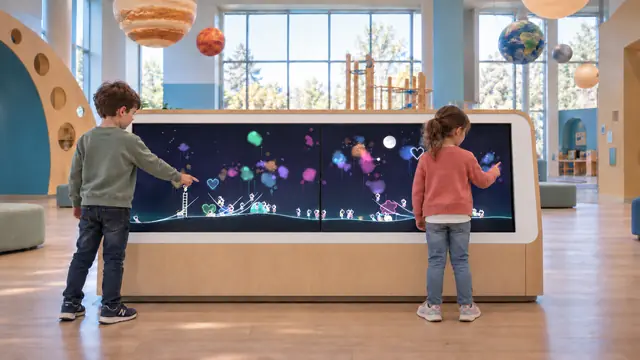
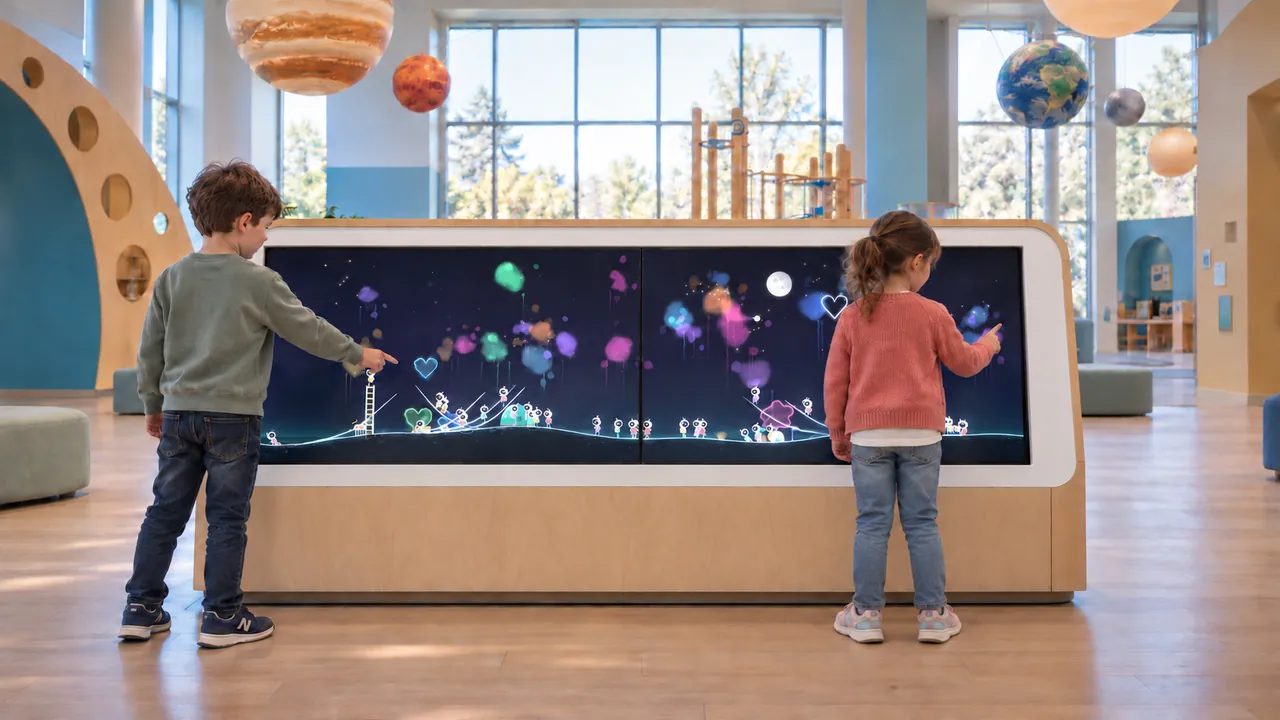
Little Astronauts is one possible starting point for a suitable family area. Visitors draw lines and shapes on a shared touchscreen and watch small astronaut characters explore the scene. The interaction gives a child a visible action and result while a companion can follow from nearby.
The reference exhibit uses a wide, paired-display cabinet. Its full operating area must be checked against the room; the website image is not evidence that it will fit a small clinic. Alternative dimensions or configurations require a technical assessment. Confirm approach space, reach, screen readability and the final audio behavior before choosing it.
Consider paper-based creativity where operations support it
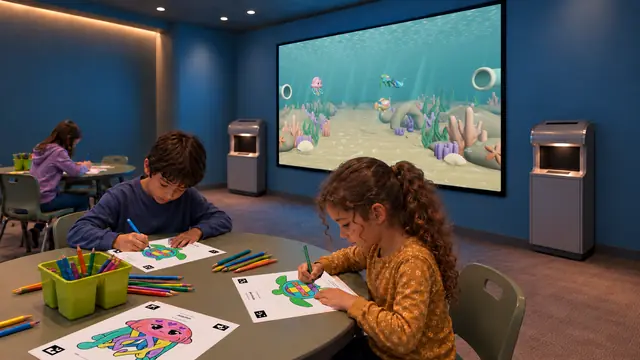
Sketch Bloom offers a different format: children color approved character templates, scan them and see the characters enter a Reef or Jungle display. This needs a drawing surface, scanner access and a place to view the result, as well as paper and coloring materials.
The clinic team should decide whether that workflow suits its waiting area and cleaning procedures. A supervised activity room may support the arrangement more comfortably than a narrow reception space. Plan storage and replenishment rather than leaving supplies on the circulation route, and establish how a family stops the activity when an appointment is ready.
Review shared surfaces with the clinic team
The touchscreen, cabinet edges, scanner and any shared coloring equipment belong in the operational review. CDC guidance includes regular cleaning policies for toys in healthcare waiting areas and cleaning procedures for shared electronic equipment. Apply the clinic's own approved protocol and the manufacturer's material-care instructions to the selected system. CDC isolation precautions recommendations
Obtain the equipment and surface specifications before purchase. Agree who checks the activity, who cleans it and how it is made unavailable when necessary. Keep cables and service access coordinated with the room plan. We review cleaning compatibility for the selected display and cabinet materials with your clinic team.
Preserve a choice of environments
Keep ordinary seating available outside the activity zone. Review display brightness and sound in the actual room, including whether staff calls remain clear. Active throwing and floor-movement exhibits should not be the default proposal for a shared dental waiting area; they require a different spatial and operational brief.
Share the available floor area, appointment flow and supervision arrangements through Contact. The next step is a clinic-specific review of whether an exhibit is suitable and, if so, which configuration supports the space.