Discover
Our Body: Interactive Human Body Exhibit
An interactive human body exhibit for exploring what happens beneath the surface.
Discuss this exhibit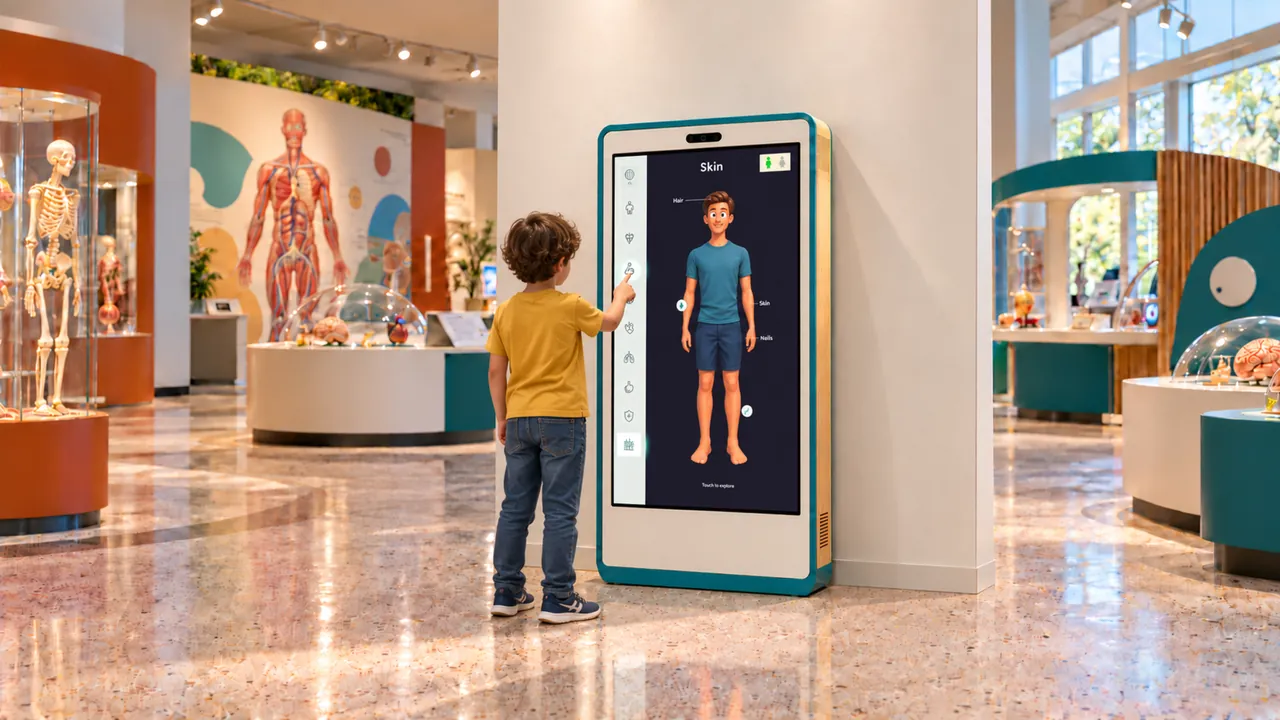
Overview
Our Body gives visitors a visual way to explore the human body. A touchscreen interface lets them switch between body views, select areas of interest and open interactive explanations of how parts of the body work.
The experience moves from the whole body to specific processes. Visitors can inspect the digestive system, explore a pupil’s response to light or follow a sensory signal in a skin illustration. Male and female models provide alternative starting views within the same experience.
Our Body · YouTube
See the interaction.
Watch the exhibit in action.
YouTube loads only when you press play.YouTube ↗
Gallery
A closer look.
The Visitor Experience
- Choose a body model and select a system or area from the interface.
- Examine the labeled view and choose a point of interest.
- Open an activity, such as the eye or skin example.
- Change the available controls and observe the visual explanation.
What Visitors Discover
Visitors explore the relationship between a body part and its function. The eye activity connects light with a changing pupil, the digestive view follows a route through the body, and the skin activity illustrates a sensory response. These examples create concrete starting points for conversation about anatomy.
Explore the Content
- Whole-body views: male and female models with labeled areas.
- Body-system exploration: skin and internal-system views, including digestion.
- Sight: an eye activity in which changing the light affects the displayed pupil.
- Touch: a skin illustration showing sensory responses to different tools.
Key Features
- Touch navigation between body views and activities.
- Male and female model selection.
- Labeled anatomical illustrations.
- Interactive explanations that move beyond a static body chart.
Specifications
Portrait kiosk
| Dimensions | Customized to the preferred screen size |
|---|---|
| Display | Portrait touchscreen; screen size selected for the project |
| Supply scope | Cabinet, exhibit PC and touchscreen |
| Optional features | Body tracking |
| Standard software languages | English / Spanish / Arabic |
| Additional languages | Available on request |
| Customization | Dimensions, materials and appearance can be customized |
| Standard warranty | 1 year |
Landscape kiosk
| Dimensions | Customized to the preferred screen size |
|---|---|
| Display | Landscape touchscreen; screen size selected for the project |
| Supply scope | Cabinet, exhibit PC and touchscreen |
| Standard software languages | English / Spanish / Arabic |
| Additional languages | Available on request |
| Customization | Dimensions, materials and appearance can be customized |
| Standard warranty | 1 year |
Specifications describe the configuration listed here. Contact us for the complete equipment schedule and installation drawing for your project.
Who It’s For and Where It Fits
Our Body fits life-science galleries, children’s museums and educational spaces focused on the human body. It supports self-directed exploration as well as discussion with an accompanying adult or educator. Healthcare venues may consider it as general educational content, with the topic selection and environment assessed for their visitors.
Exhibit Configurations and Customization
We offer Our Body in two kiosk configurations: portrait and landscape. Both use a touchscreen, with cabinet dimensions tailored to your preferred screen size. Materials and appearance are customizable. Body tracking is an optional feature for the portrait kiosk. English, Spanish and Arabic are standard software languages, with additional languages available on request.
Space and Installation Requirements
- Allow visitors to approach the screen comfortably and companions to see the anatomical illustrations.
- Keep labels readable by controlling reflections and selecting an appropriate display position.
- Provide power, concealed cabling and service access. Confirm mounting or floor support, networking and ventilation for the chosen cabinet.
What’s Included
Our Body combines anatomy software, interactive body activities and touch input. We supply the cabinet, exhibit PC and touchscreen for either kiosk configuration. Body tracking can be added to the portrait kiosk as an option. Your project proposal sets out the final configuration, installation and training scope, and any ongoing services. Every exhibit includes a one-year standard warranty.
Application Examples
- Science museums: support a life-science gallery with body-system exploration.
- Children’s museums: connect familiar experiences such as seeing and touching with illustrated explanations.
- Children’s healthcare education areas: provide general body-learning content where the venue approves the subject matter and visitor setup.
Frequently Asked Questions
Can visitors switch between body models?
Yes. The supplied preview shows switching between male and female models.
Is the content only a labeled diagram?
No. The preview includes interactive examples such as changing the light around an eye and exploring a skin response.
Can the exhibit use a horizontal screen?
Yes. Our Body is available as either a portrait or landscape touchscreen kiosk. We customize the cabinet dimensions to the screen size you choose. Optional body tracking is available for portrait mode.
Is it intended for diagnosis or clinical training?
The page presents an educational museum experience. Clinical training, diagnosis and professional medical validation are outside the verified scope.
Related Interactive Exhibits
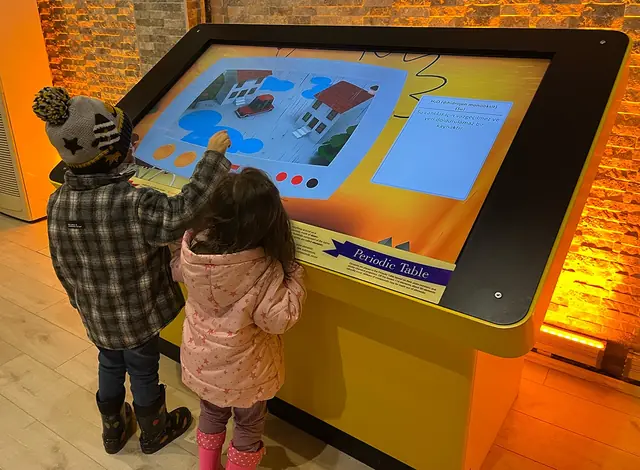
- Periodic Table: Connect the human-body gallery with an exploration of chemical elements.
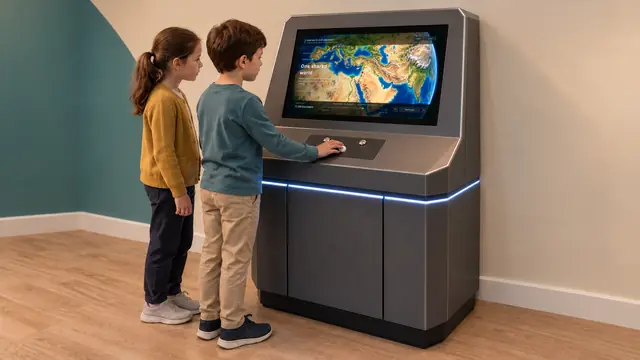
- How Big Is Universe: Move between the body’s scale, microscopic structures and the wider universe.
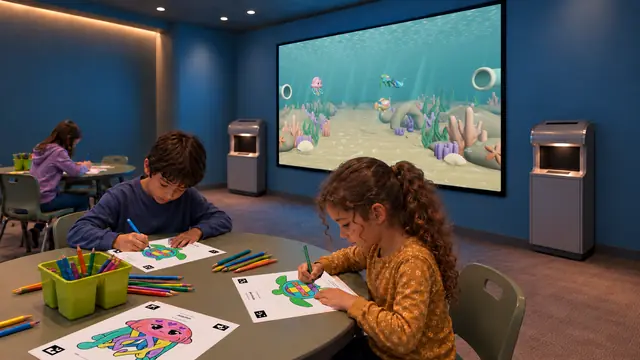
- Sketch Bloom: Provide a complementary creative activity for younger family visitors.
Plan Your Exhibit
Tell us about your life-science area and preferred display orientation to discuss Our Body.
Discuss this exhibitKeep exploring.
All interactives
Discover
How Big Is Universe
A scale of the universe exhibit that connects the very small with the very large.
Discover
Periodic Table
A periodic table touchscreen that invites visitors to investigate the elements.