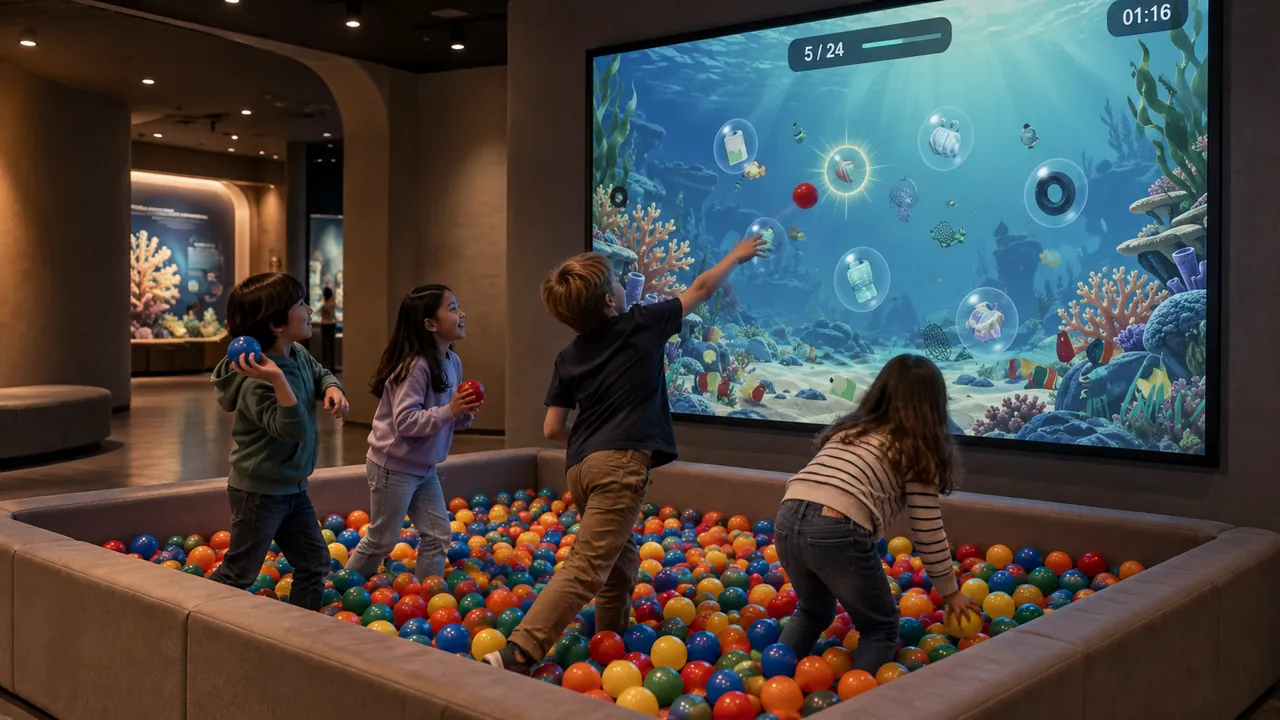
We design our digital exhibits around the actions visitors take and the way your team will operate the space. Choosing digital attractions for a family entertainment center starts with the visit you want to offer. A room full of energetic activities may still be missing somewhere to make something carefully. A creative zone may need an attraction that is easy to notice from the entrance. Build the selection around different ways of participating, then check how those activities share the floor.
Give each attraction a role
Start a short list with a purpose beside every product. One may invite movement, another offer a drawing activity, and another give a family something to watch together. This prevents a purchase list from becoming several versions of the same interaction.
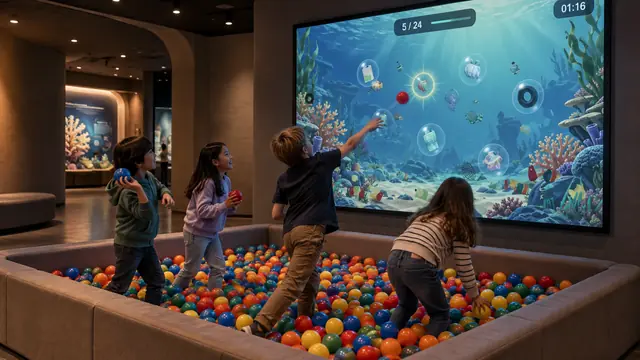
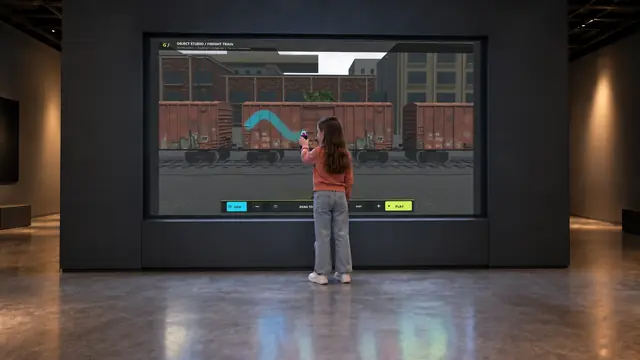
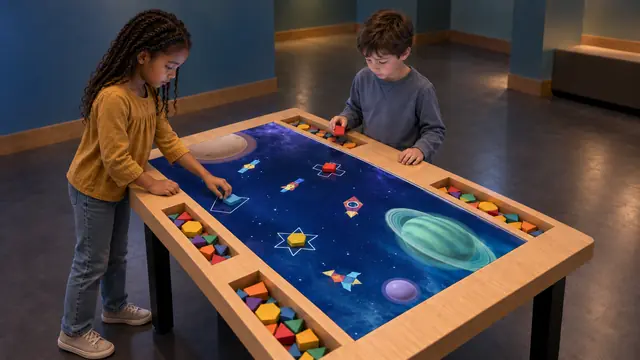
Ball Wall connects a physical throw with a projected response. Digital Graffiti gives a visitor a spray controller and a large digital canvas. Build Bloom asks visitors to arrange real geometric pieces. All three can contribute to a family venue, but their actions, spatial needs and staff tasks differ. Compare those differences before comparing screen sizes.
Design a change of pace
Draw a visitor route that includes opportunities for movement, observation and making. A child who has just left an active attraction may choose a seated coloring activity; another may prefer to watch a sibling before joining in. This is a planning proposition to test with your audience, not a promise about how long every family will stay.
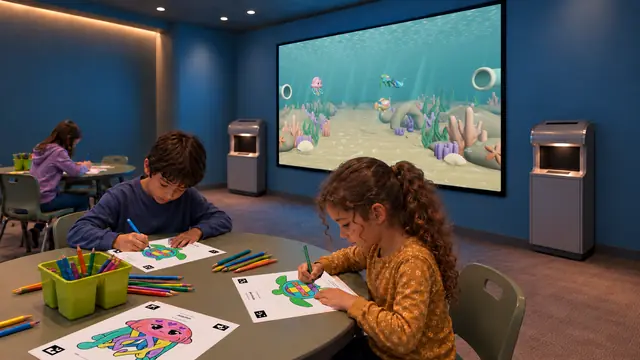
Sketch Bloom is useful to consider where a venue wants a paper-based creative sequence. The table, scanner and display create distinct stages. Protect the drawing area from the circulation of an adjacent throwing game, and avoid placing a scanner queue through seated workspaces. The combination only works when the routes work.
Make spectators part of the layout
A visible result helps companions follow an activity, but a spectator position should not obstruct the next participant. For Digital Graffiti, sketch the painting zone and a separate place to watch. For a table, check whether adults can stand nearby without closing the route around it. For a kiosk, consider whether someone using the controls blocks the main display.
Review the layout with the team responsible for admissions, parties and floor supervision. A plan that works for a quiet weekday may behave differently when several groups arrive together. IAAPA’s FEC benchmarking framework includes attraction mix, operations, staffing and visitor information; these are useful categories to consider together, even without applying another venue’s figures to your project. IAAPA’s research scope.
Separate atmosphere from interference
Sound and light should help visitors understand the activity they are using. Dance Floor responds to steps with lights and music. Sketch Music combines drawing with audible responses. If they share an area, test whether visitors can distinguish their own action from the neighboring sound. Specify speaker positions and operating levels as part of the room design.
Projection also deserves a location-specific review. Windows, decorative lighting and reflective finishes can change what visitors see. Confirm the projection surface and display arrangement under the intended lighting conditions, rather than treating a demonstration video as a guarantee of brightness in every room.
Plan the next operating day
Ask who returns pieces to trays, checks spray controllers, replaces coloring sheets and performs opening checks. Make those tasks visible in the staffing plan and quotation. A new theme may offer another reason to explore an attraction, but confirm what is licensed and how changes are selected before promising seasonal refreshes.
Compare proposed attractions by their role, space, required attention and supported content. Then observe how a small group actually uses the combination. The goal is an activity mix that makes sense for your families and your team, with each exhibit contributing a different reason to participate.