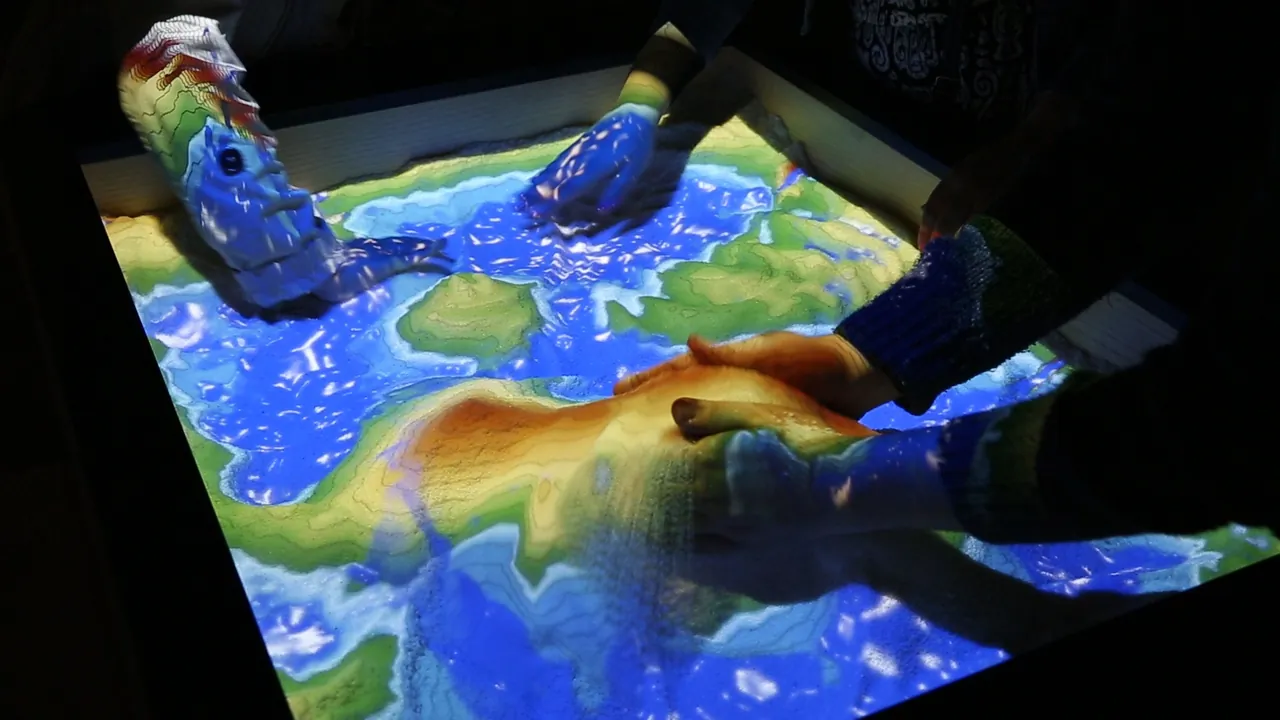
This application guide explores how a children's museum could bring physical making and digital discovery together. AR Sandbox provides a shared starting point: children shape a landscape with their hands and watch its projected map change.
Begin with a landscape children can build
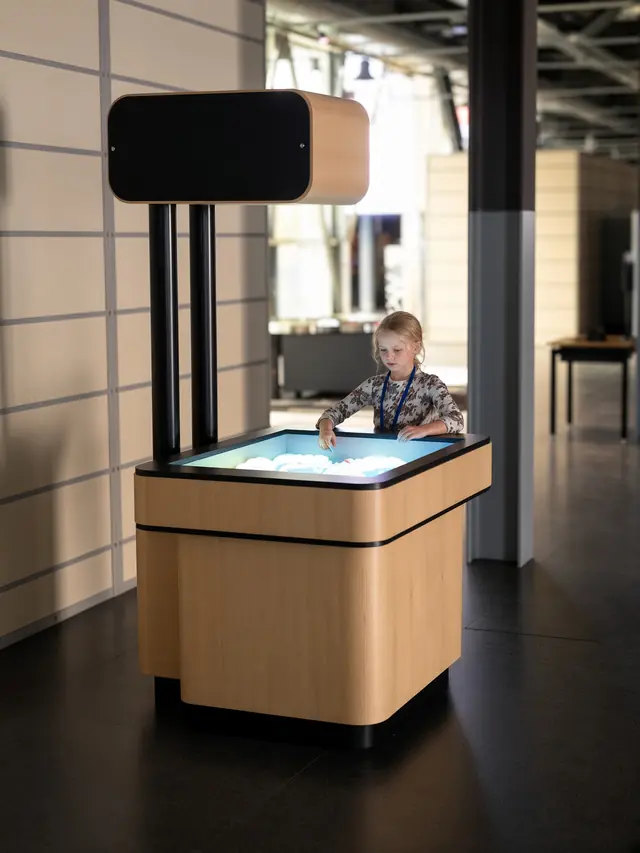
AR Sandbox combines real sand with projected elevation colors, contour lines and virtual water. Children can gather sand into a hill, dig a valley or open a channel between two lower areas. As the surface changes, the projection gives them another way to see what they have made.
That connection makes an augmented reality sandbox a practical starting point for a hands-on discovery gallery. The sand is the building material; the changing landscape is something families can examine together. The water is a digital visualization, so the activity does not require visitors to add real water.
Turn a simple action into a shared question
A museum educator might begin with a small invitation: “Can you make a mountain?” Then ask the group to notice the colors on its slopes or compare the lines near the top and bottom. Another invitation could be to build a valley and investigate where the virtual water appears.
These are open-ended prompts, rather than a fixed sequence every child must complete. A younger visitor can concentrate on shaping and noticing, while a companion can introduce words such as high, low, ridge and channel. Families can change one part of their landscape and compare the result before trying something else.
The shared sand table also gives companions a clear role. One person can build while another observes the projection, points out a change or suggests the next landform. Plan the operating positions and reach around the actual basin so that this collaboration works comfortably.
Connect terrain play with other ways of making
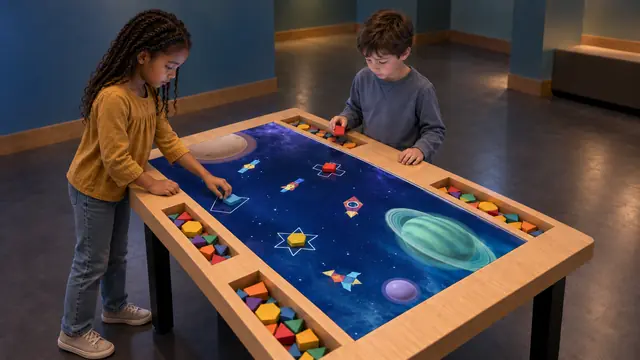
Build Bloom adds a different building material: physical geometric pieces on a digital activity surface. Children can compare edges, turn a shape and try another arrangement. Together, the two exhibits create a making area with distinct actions and responses.
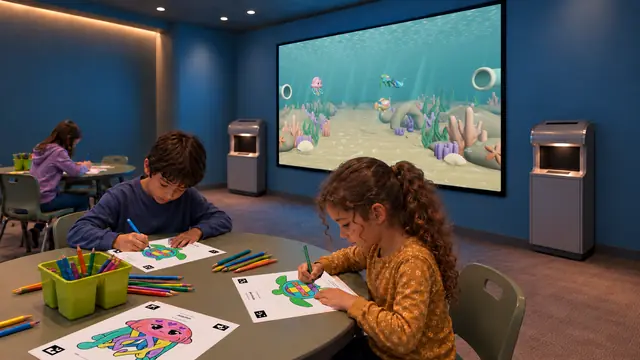
Sketch Bloom extends that area into drawing. Visitors color approved paper outlines, scan them and find their characters in the Reef or Jungle scene. Keep the tables, scanners and shared screen visually connected so families can follow the whole process.
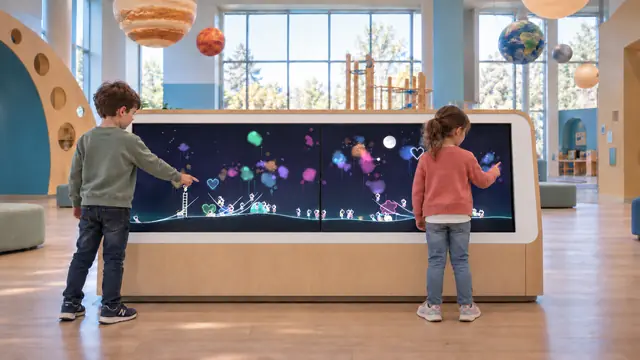
Little Astronauts offers direct drawing on a wide touchscreen. Children add routes and shapes and watch the small characters explore. Choose the combination around the museum's intended visitors, available space and operating team.
Give the sandbox the right setting
The basin and its overhead sensing and projection equipment should be planned as one installation. Control direct sunlight and strong ambient light so the terrain colors and contours remain readable. Include circulation around the table, companion positions, power, cable management and access for calibration.
Accessible approaches, operating positions and clear instructions belong in the first layout. Review the proposed basin height and reach with the venue team, rather than assuming one arrangement suits every visitor. The Smithsonian's accessible exhibition guidance provides a useful starting point for considering access across the gallery.
Plan for everyday use
We review the sand specification, routine care and equipment checks with your operating team as part of planning the AR Sandbox installation. The operating team should know how to prepare the table, recognize a projection alignment issue and obtain support.
If the gallery also includes drawing or geometric building, plan paper storage, coloring supplies and piece-return areas alongside the sandbox care routine. Review the complete visitor sequence with the intended hardware before confirming age suitability, simultaneous use and the final installation scope.
Start with the experience, then build the collection
AR Sandbox can anchor a children's museum discovery area around landscape making. Add Build Bloom, Sketch Bloom or Little Astronauts where they introduce another useful form of participation. Share your floor plan, intended visitors and gallery theme through Contact to develop a collection suited to your museum.